Blackout Curtains
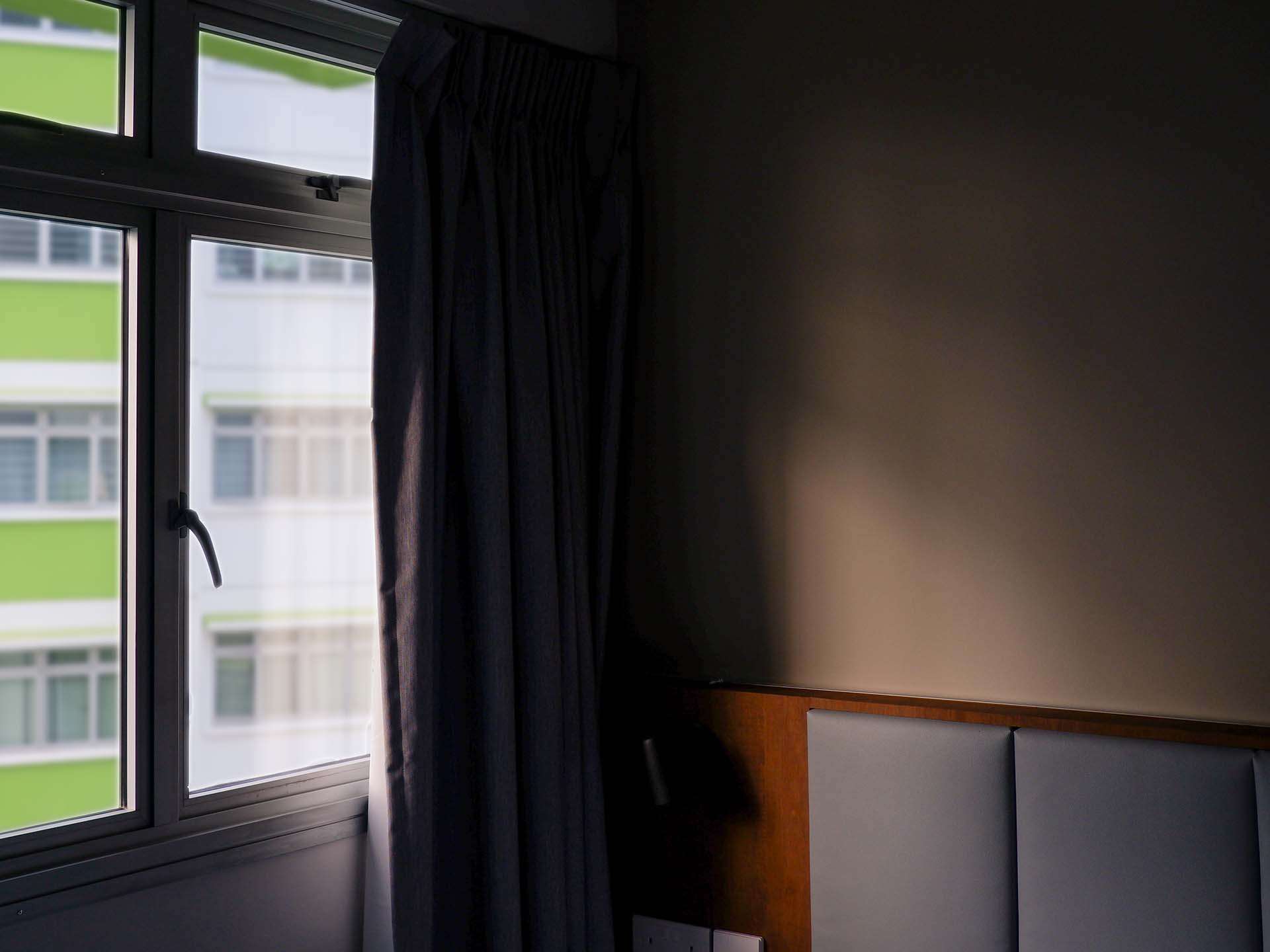
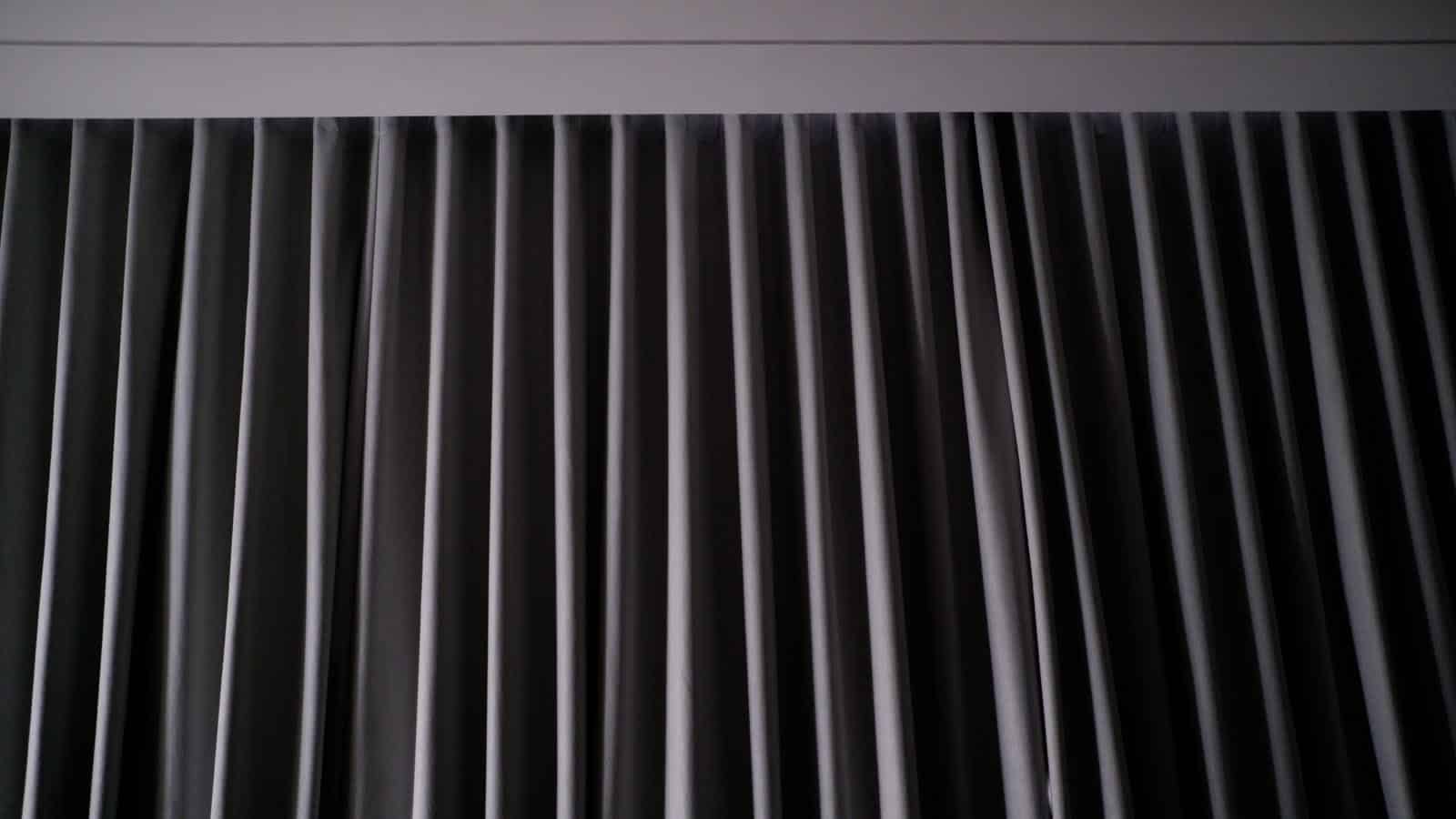
Blackout Curtains are made from densely woven, opaque fabric designed to block 99–100% of light through the weave.
They are commonly used in bedrooms, children's rooms, and home cinemas, where consistent darkness is needed regardless of the time of day. Beyond darkness, blackout fabrics also reduce solar heat gain and dampen external sound.
Blackout fabrics are available across our entire range of curtain systems and within all three of our fabric collections – Juliette, Lumiere, and Monet.
Properties
Full Light Blockage
Densely woven, opaque fabric that blocks 99–100% of light passing through the weave. Suitable for bedrooms, baby rooms, and AV rooms.
Heat & UV Reduction
Thick blackout fabrics also reduce solar heat gain through the window, particularly noticeable on west-facing rooms in Singapore during late afternoon.
Quieter Rooms
The same density that blocks light also dampens external sound, softening traffic and street noise in rooms facing busy roads or low-floor flats.
Available Across Systems
Blackout fabric is offered in S-fold, pleated, and roller systems and across all three of our fabric collections, so the look matches the rest of the home.
Blackout Curtains in Singapore Homes
Why Sleep Schedules Need More Than Dim
Singapore lies almost on the equator, so sunrise stays close to 7am year-round and the morning sun comes in fast and bright. Without proper blackout, east-facing bedrooms light up well before most people want to wake. A real blackout setup is what allows sleep schedules that don't track the sun, weekends spent recovering sleep, and reliable daytime naps for children.
West-Facing Units and Heat
HDB and condo units oriented west take direct afternoon sun for several hours each day. Beyond glare, that sun heats the room through the window. Blackout curtains reduce that heat gain noticeably, particularly during the 2pm to 5pm window when sun angle and intensity peak. Many west-facing bedrooms are kept cooler with blackout curtains drawn during the late afternoon, even when no one is in the room.
Layered Day and Night Configuration
The standard Singapore bedroom curtain setup is a two-track system: a sheer curtain on the front track for the day, a blackout curtain on the back track for the night. Both layers sit inside a shared false-ceiling pelmet, typically requiring roughly 200 millimetres of pelmet depth. The blackout layer stays drawn back during the day; the sheer manages daytime light and privacy.
Available Systems
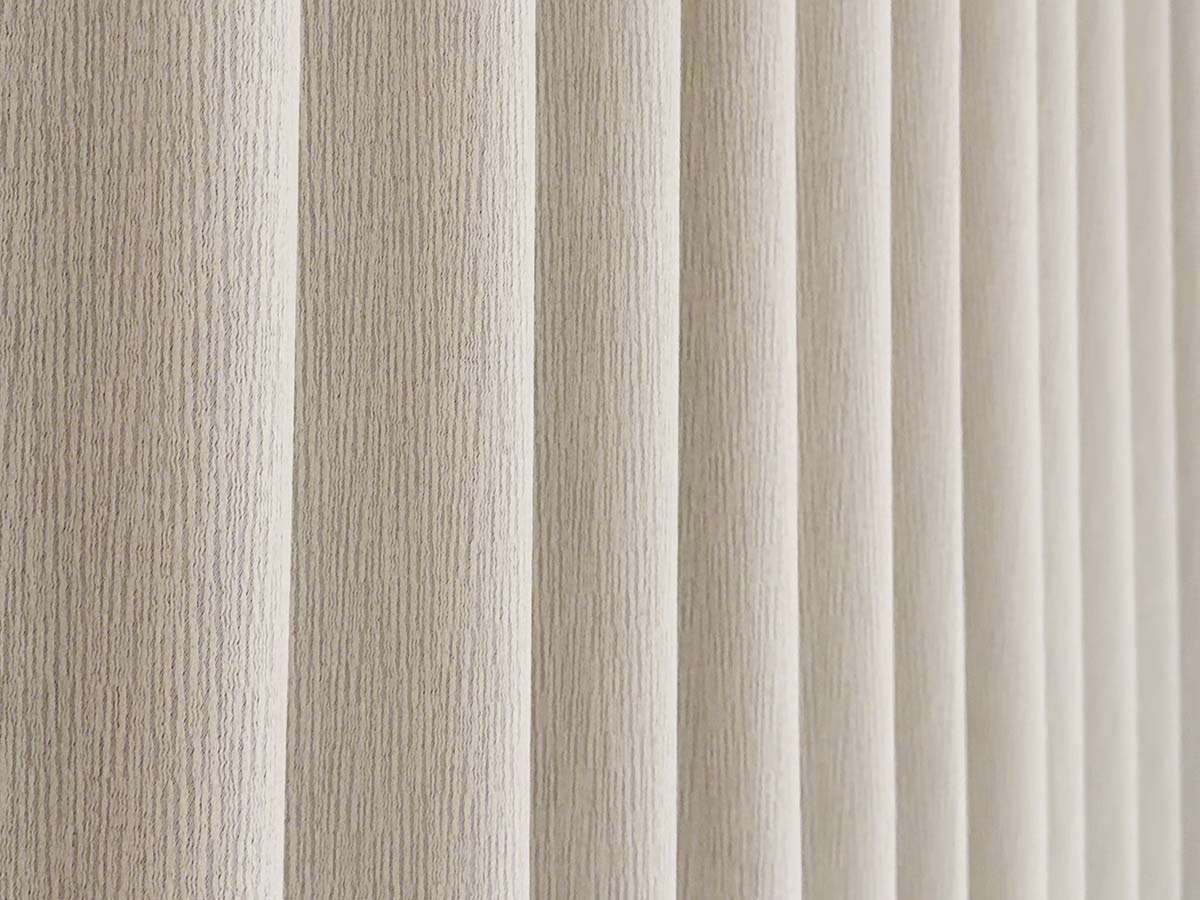
S-Fold Curtains
Soft, continuous waves with a contemporary feel. Pairs with blackout fabric where full coverage and a clean silhouette are both wanted.
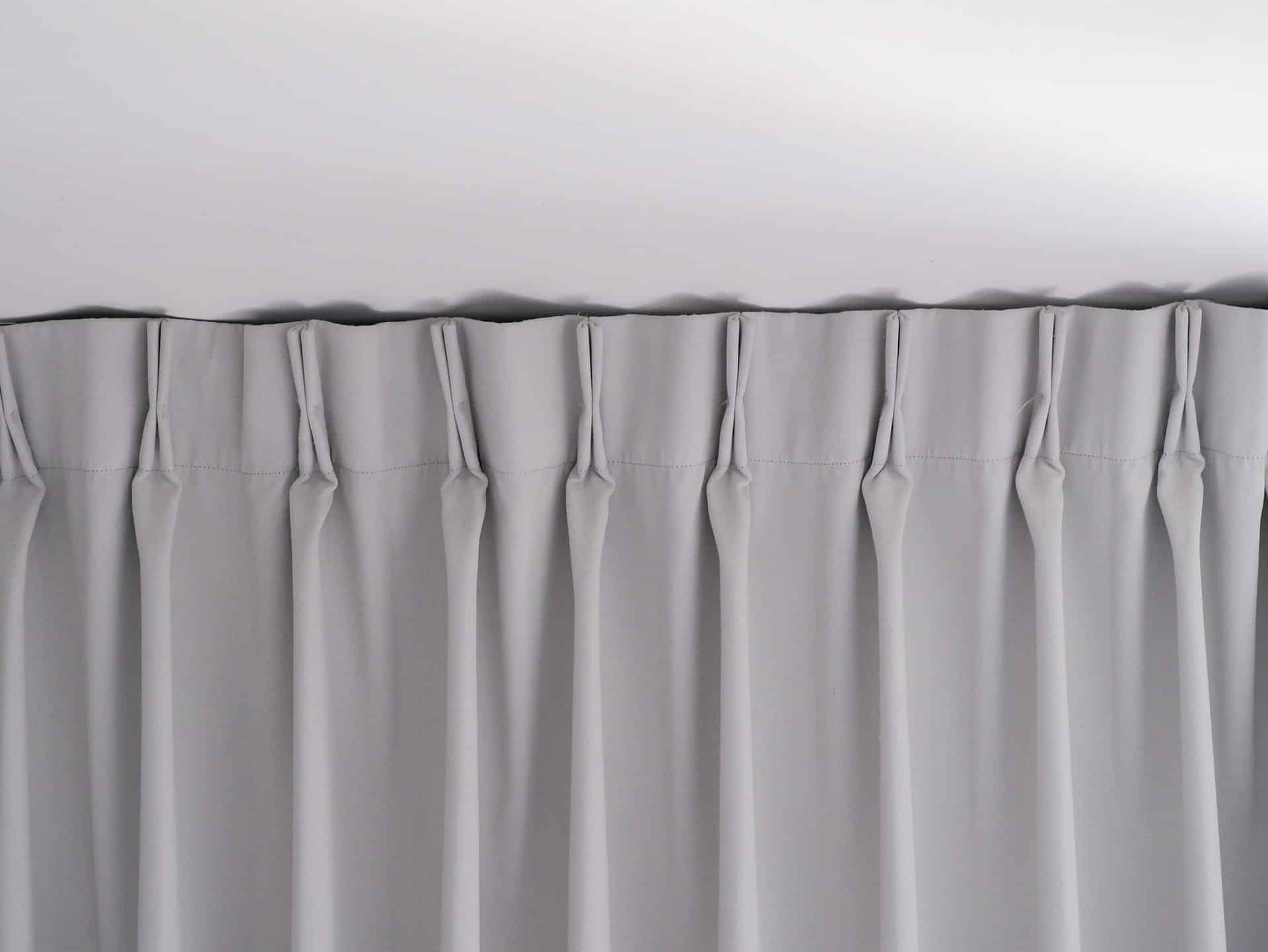
Pleated Curtains
Structured, evenly spaced folds. The denser top header improves the seal at the top of the panel, useful in bedrooms where light leakage above the curtain is a concern.
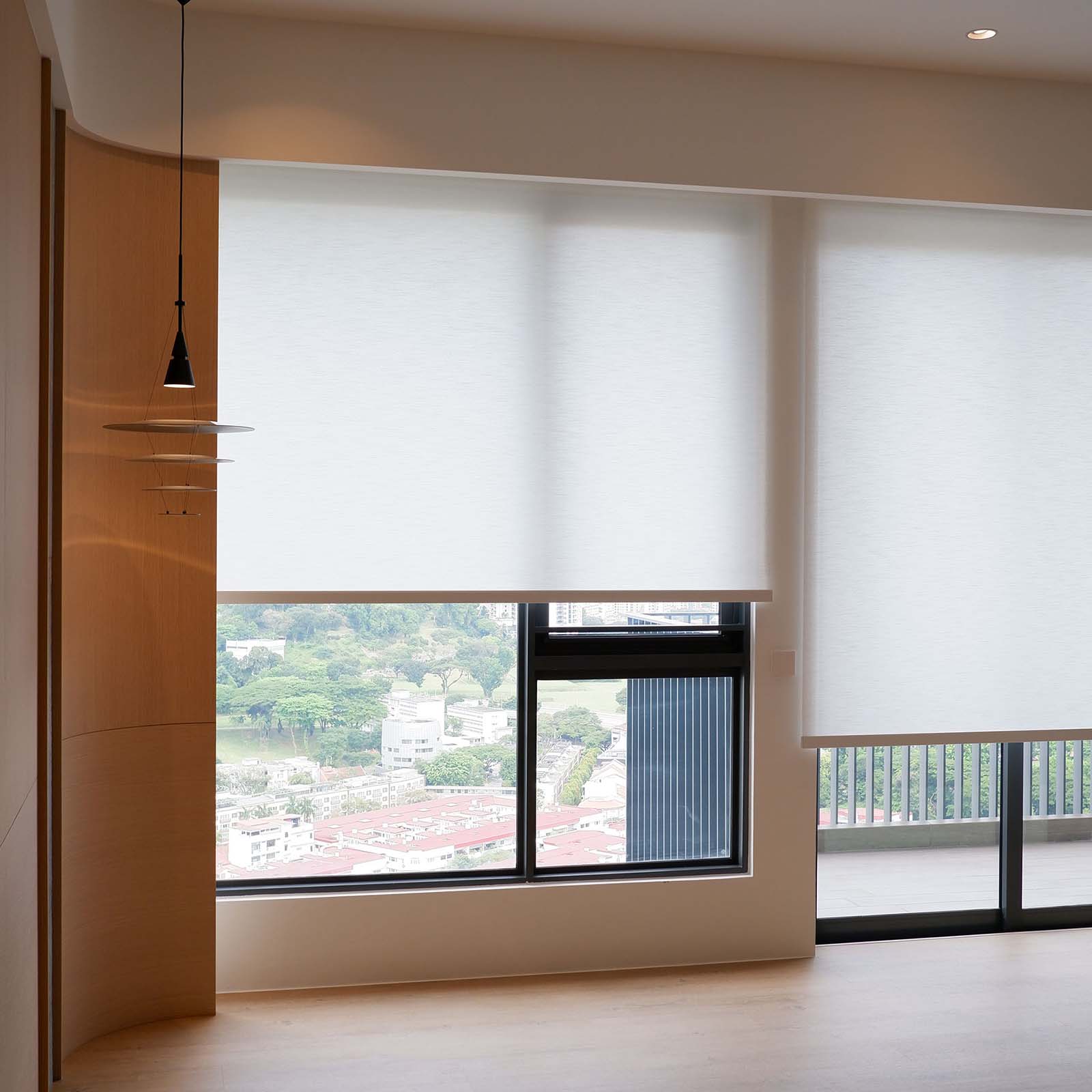
Roller Blinds
A flat blackout panel that rolls up cleanly. Suited to AV rooms, secondary windows, and as the back layer behind a sheer curtain.
Choosing Blackout for Specific Rooms
Master Bedroom
The most common application. The standard Singapore master- bedroom configuration is a layered sheer-plus-blackout curtain system on a two-track recessed pelmet. Pleated or S-fold systems both work; pleated gives a slightly tighter top seal.
Baby and Children's Rooms
Daytime naps need real darkness. Blackout curtains paired with a deep pelmet (to seal the top) and proper side returns (to seal the wall) make the room sleep-ready at any time of day. Layered sheer-plus-blackout is preferred so the room can be bright and soft during awake hours.
Home Cinema and AV Rooms
For projection setups, blackout roller blinds against a dark recess give cinema-grade contrast without the visual presence of full-length curtains. In condo apartments where AV rooms double as living rooms, the roller can be hidden in a false ceiling and only deployed for movie nights.
Hot West-Facing Living Rooms
Some west-facing living rooms benefit from a blackout layer drawn during the late afternoon, even though darkness is not usually wanted in living spaces. Layered behind a sheer curtain, the blackout layer can sit out of view most of the time and only be drawn when the afternoon sun becomes uncomfortable.
Designing for Real Darkness
Fabric density alone does not make a bedroom dark. Most light leakage comes from gaps around the panels rather than through the fabric itself. A well-designed blackout setup accounts for three things:
- Fabric overlap in the centre– the two halves of a centre-opening curtain need to overlap by at least 100 millimetres so no light gap forms when the curtain is fully drawn.
- Deep returns at the wall– the curtain ends should curve back to the wall by at least 100 millimetres, not stop short with a gap, so light cannot leak around the side of the panel.
- A pelmet or recessed track at the top– with the track recessed into a false-ceiling pelmet or concealed behind a surface pelmet, light cannot pass over the top of the curtain. This is usually the largest light gap on an unaddressed installation.
These details are determined during measurement and influence the final installation. They are part of every blackout curtain project we undertake.
When Should You Choose Blackout Curtains?
Blackout Over Dimout or Sheer
Sheer fabrics filter daylight while keeping the view soft and do not darken the room. Dimout fabrics reduce light transmission but allow some daylight through, suiting living rooms or studies where softness is preferred over full darkness. Blackout is the densest of the three, designed for sleep, projection, and any space where consistent darkness is required.
Blackout Curtain or Blackout Roller Blind
Both work. Blackout curtains add fabric softness and full-height drape, which is why they are the more common bedroom choice. Blackout roller blinds are flatter, more compact, and seal more tightly to the window, which is why they often win in AV rooms and as a hidden secondary layer behind a sheer curtain.
Read more in our guide
More on choosing fabrics and getting installation right.
Ready to visit?
- ✓Experience our fabrics – feel and see how they move in natural light.
- ✓Explore full-sized curtains and blinds in a real setting.
- ✓Try out motorized and smart systems before you decide.
- ✓Get personalised advice from our team.
- ✓Discover combinations that work for your space, lighting, and style.